
Avoiding online puppy scams in 2026 doesn’t start with being suspicious. It starts with being prepared. Before you ever message a breeder, take ten minutes to gather a few simple tools — the ones that separate a careful buyer from an easy target.
Here’s your pre-search checklist:
- A reverse image search tool (Google Lens or TinEye) bookmarked and ready
- A video call app installed and tested on your phone
- A written list of questions you want to ask the breeder
- A payment method that offers buyer protection (a credit card or a protected payment service)
- A folder on your device for saving screenshots, emails, and receipts
Key Takeaway: The single biggest factor in whether someone gets scammed is how much legwork they do before sending money. Preparation beats hope every single time.
If you’re already browsing listings — maybe you’ve fallen in love with a tiny face on a breeder’s site like Dreamer’s Pups — that’s wonderful. Just don’t let excitement override common sense. Gather your tools first, then start reaching out.
Puppy Scam Red Flags You Should Never Ignore
The warning signs almost always show up before you lose a dime. Pressure to pay quickly, prices that seem impossibly low, a seller who won’t video chat, payment methods you can’t trace — these are the tells. Spot them early and you’ve already won half the battle.
Pressure Tactics and Too-Good-to-Be-True Prices
Scammers love to manufacture urgency. Another family is supposedly “ready to pay right now.” The price magically drops if you commit within the hour. Here’s the thing: that deadline is fiction. A real breeder almost never pushes you to decide in minutes. If someone is rushing you, that’s your cue to slow down.
AI-Generated Photos and Fake Websites in 2026
This is where things have gotten genuinely tricky. AI-generated puppy photos are now one of the hardest red flags to catch, because today’s image tools produce fur, eyes, and lighting that look completely real. Fake websites make the problem worse — polished layouts, glowing testimonials that don’t exist, logos lifted from legitimate breeders.
Watch for these tells:
- Paws with too many toes or weird, melted shapes
- Backgrounds that blur unnaturally around the puppy’s edges
- The same “litter” showing up on multiple unrelated websites
- A site with no physical address, no phone number, and no verifiable history
Watch Out: If a breeder flat-out refuses a live video call, stop right there. That single refusal is the most reliable red flag in online pet fraud, and ignoring it is how most people lose their deposit.
How to Verify a Breeder Before You Send Money
Verifying a breeder really comes down to confirming three things: the person exists, the puppy exists, and you can see both of them live at the same time. Real legitimacy comes from evidence you gather yourself — not from a slick website or a seller’s reassuring words.
Step 1: Run a Reverse Image Search on Every Photo
This is the fastest test you can run, and most buyers skip it completely. Save each puppy photo to your phone or computer, then:
- Open Google Lens (lens.google.com) or TinEye (tineye.com).
- Upload the saved image, or paste the image URL if the listing lets you right-click and copy it.
- Look through every result carefully. You’re hunting for the same photo appearing on other breeder sites, classified ad pages, social media accounts, or stock photo libraries under a totally different name.
- Repeat the process for the mother’s photo, the father’s, and any group shots of the “litter.”
Step 2: Run a Live Video Call With a Verification Protocol
A video call only works if you control what you see. A scammer can play a pre-recorded clip or angle the camera at a blank wall and hope you don’t notice. Use this protocol instead of settling for a casual chat:
- Ask for a specific object on camera. Request that the breeder hold up today’s newspaper, a spoon, or a shoe right next to the puppy. A recorded video can’t respond to something you invent on the spot.
- Ask them to say your name and the date out loud. Deepfake audio and replayed clips won’t match a live, unscripted prompt.
- Ask to see the puppy walk. Movement exposes AI-generated stills and photo composites — they fall apart when the subject has to move continuously.
- Ask to see the mother and the litter’s living space. A real breeder has both right there. A scammer will stall, claim the mother is sleeping, or conveniently “lose connection.”
- Ask to see the puppy’s belly and paws. This is where AI images fail most often — extra toes, melted paw shapes, fur blurring into the background.
- Watch the room, not just the puppy. A genuine home has clutter, background noise, imperfect lighting. A staged set looks like a showroom.
Step 3: Verify the Paperwork Independently
Ask for the puppy’s vaccination and deworming records, the written health guarantee, and the name of the veterinarian who has seen the litter. Then verify each one yourself:
- Call the vet’s office directly using a number you look up — not one the breeder hands you.
- Ask whether the breeder is a current client and whether the puppy has actually been seen.
- Check the breeder’s name and kennel name against your state’s breeder licensing or registration records, if your state keeps them.
- Search the breeder’s name along with the words “scam,” “review,” and “complaint” — and read past the first page of results.
Step 4: Confirm the Person, Not Just the Puppy
Ask for a phone number and call it. Ask for a physical address and look it up on a map — a residential address is normal, but a mailbox store or a vacant lot is not. Reverse-search the breeder’s email and phone number. Scammers reuse the same contact details across dozens of fake listings, so a single search can uncover a trail of prior victims.
Pro Tip: Run all four checks before any money moves — even a deposit. A deposit is the scammer’s real prize, because it’s small enough that buyers rarely fight it and large enough to be worth repeating across hundreds of targets.
What AI Changes in 2026
AI image and video tools have made visual red flags much harder to catch, which is exactly why the protocol above leans on live, interactive prompts rather than static photos. A polished website, a realistic puppy picture, and even a short video clip can now be generated in minutes. What AI can’t do is respond to an unscripted request in real time — and that’s why the object-on-camera test and the spoken-name test remain a buyer’s strongest tools.
Questions to Ask a Puppy Breeder That Expose Fakes
The right questions tell you quickly whether you’re dealing with a professional or a fraudster. Ask these before any payment changes hands:
- Can we schedule a live video call today?
- Can you show me the puppy’s mother and the litter’s living space?
- What vaccinations and deworming has the puppy received, and can I see the records?
- Which veterinarian do you use, and may I contact them?
- Why are you rehoming this litter, and how long have you been breeding?
- What health guarantee do you offer — and is it in writing?
Safe Ways to Pay for a Puppy Online
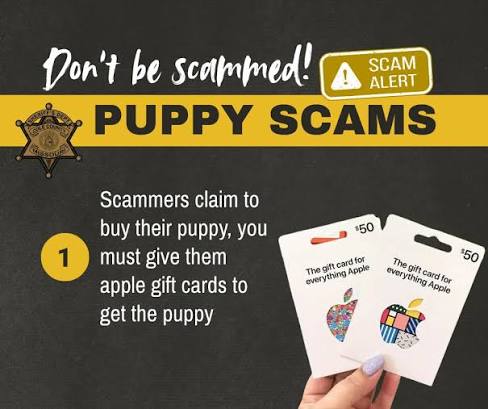
The safest way to pay for a puppy online is to use a method that gives you buyer protection. Credit cards and reputable payment services let you dispute a fraudulent charge. Wire transfers, gift cards, and cryptocurrency give you nothing — and they’re exactly what scammers prefer.
| Payment Method | Protection Level | Recoverable If Scammed? |
| Credit card | High | Yes, via chargeback |
| Protected payment service | Moderate to high | Often, via dispute |
| Wire transfer | None | Rarely |
| Gift cards | None | No |
| Cryptocurrency | None | No |
Pro Tip: Pay a deposit only after a successful video call and after you’ve reviewed the health records. Never send the full amount upfront for a puppy you haven’t seen live.
What to Do If You’ve Been Scammed
Speed matters more than anything else when it comes to recovering your money. Fraudulent charges have dispute windows, so treat the first 24 to 48 hours as a recovery window — not a grieving period.
Step 1: Contact Your Payment Provider Immediately
How you recover depends on how you paid:
- Credit card: Call the number on the back of your card and say “fraudulent charge” and “chargeback.” Under the Fair Credit Billing Act, you generally have 60 days from the statement date to dispute a billing error, but calling within the first few days puts you in the strongest position. Ask for the dispute in writing and get a case number.
- Debit card: Call your bank’s fraud line. Debit disputes fall under the Electronic Fund Transfer Act, and your liability can increase the longer you wait. Ask the bank to flag the transaction and issue a provisional credit while it investigates.
- Protected payment service: Open a dispute through the platform’s resolution center. Most services require you to file within a set window — often 180 days — and they weigh evidence heavily, so upload your screenshots and messages along with the dispute.
- Wire transfer: Call your bank’s wire department the same day. Once a wire is picked up, recovery is difficult, but a same-day recall request occasionally works. Ask the bank to file a fraud report regardless.
- Gift cards and cryptocurrency: These are effectively unrecoverable. Report them anyway so the pattern is documented, but don’t expect a refund.
Step 2: Preserve Every Piece of Evidence
Before you block the scammer, save everything:
- Screenshot the entire conversation thread, including timestamps.
- Save the listing page, the breeder’s profile, and any website pages.
- Download the payment confirmation and receipt.
- Save the breeder’s email address, phone number, and any social media handles.
- Note the website URL and, if you can track it down, the hosting provider.
Do not delete the messages or confront the scammer. That only tips them off to close accounts and disappear.
Step 3: Report to the Right Agencies
File reports with each of the following. Together they build the paper trail that supports your dispute and helps investigators connect your case to others:
- Federal Trade Commission — file at the FTC’s fraud reporting portal. The FTC doesn’t resolve individual cases, but it aggregates reports and pursues patterns.
- FBI Internet Crime Complaint Center (IC3) — file at the IC3 complaint portal if the fraud crossed state lines or involved a fake website. IC3 reports feed into federal investigations.
- Your state attorney general’s consumer protection office — most states accept online complaints and can act against businesses operating within the state.
- Your local police department — file a report and get a copy. Banks and payment services often require a police report number to process a fraud dispute.
- The website’s hosting provider and domain registrar — report the fake site so it can be taken down. Look up the host using a WHOIS lookup tool.
- The platform where you found the listing — Facebook, Craigslist, and similar sites have fraud reporting tools, and enough reports trigger account removal.
Step 4: Warn Other Buyers
Post the scammer’s details — email, phone number, website, and the photos they used — in breed-specific forums, local pet communities, and review sites. Other buyers search these before purchasing, and one well-documented warning can stop the next victim. Include your reverse image search results; that evidence is the most persuasive thing you can share.
Watch Out: Never send additional money to a scammer who claims a “refund fee,” “customs charge,” or “release payment” is required to get your puppy or your money back. That’s a second-stage scam targeting people who already paid once.
What Recovery Realistically Looks Like
Credit card chargebacks succeed most often when they’re filed quickly and backed up with documentation. Wire transfers and cryptocurrency are rarely recovered. Even when the money doesn’t come back, filing reports matters — each one strengthens the case against repeat offenders. Keep your case number and follow up every two weeks until the dispute is officially closed.
Conclusion
Online puppy scams cost families real money and real heartbreak, and the tactics keep getting more sophisticated every year. But the defense is simple: verify before you pay, demand a live video call, and use payment methods that protect you. Dreamer’s Pups raises healthy, socialized Chihuahua puppies in a family home, provides fully documented vaccination and deworming records, and stands behind every puppy’s health.
Frequently Asked Questions
How do I spot a puppy scammer online?
Watch for sellers who refuse video calls, demand payment through wire transfer or gift cards, or pressure you to decide within hours. Run a reverse image search on their puppy photos to check for stolen pictures. Legitimate breeders like Dreamer’s Pups welcome questions and provide health records. If the price is far below market rates or the seller dodges direct conversation, treat it as a red flag and walk away.
What are the safest ways to pay for a puppy online?
Credit cards and PayPal Goods and Services offer fraud protection and dispute rights. Avoid wire transfers, gift cards, cryptocurrency, and peer-to-peer payment apps like Zelle or Venmo, which have no buyer protection. A reputable breeder will accept a traceable payment method and provide a written contract. If a seller insists on an untraceable payment, that alone is a puppy scam red flag.
What questions should I ask a puppy breeder to verify they’re legitimate?
Ask for veterinary records, vaccination schedules, and the name of their vet so you can confirm. Request a live video tour of the puppy’s living space. Ask about the puppy’s parents, health testing, and whether they offer a health guarantee. A transparent breeder will answer without hesitation. If they dodge questions or give vague answers, that’s a warning sign of fraudulent activity.
What should I do if I’ve already been scammed?
Report the fraud immediately to the FTC at ReportFraud.ftc.gov and file a complaint with the FBI’s IC3. Contact your bank or payment provider to dispute the charge if possible. Gather all communication, receipts, and photos the scammer sent. You can also report the fake website to the hosting provider. Acting quickly improves your chances of recovering funds and helps protect other buyers.
